
Key Facts
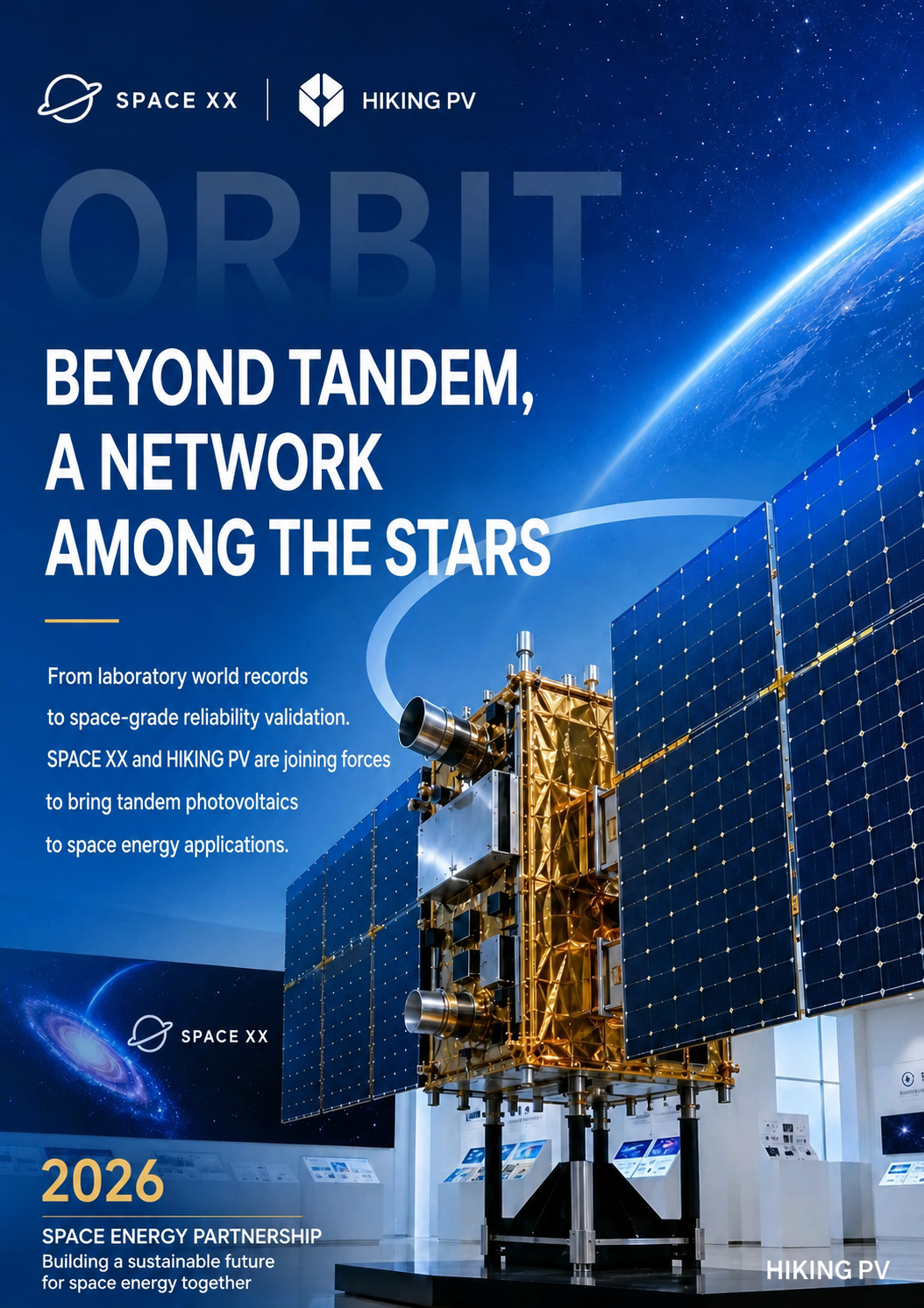
- HIKING PV is collaborating with a satellite-sector partner on tandem PV applications for space energy.
- The collaboration is intended to move tandem photovoltaics from laboratory efficiency records and reliability validation toward aerospace energy applications.
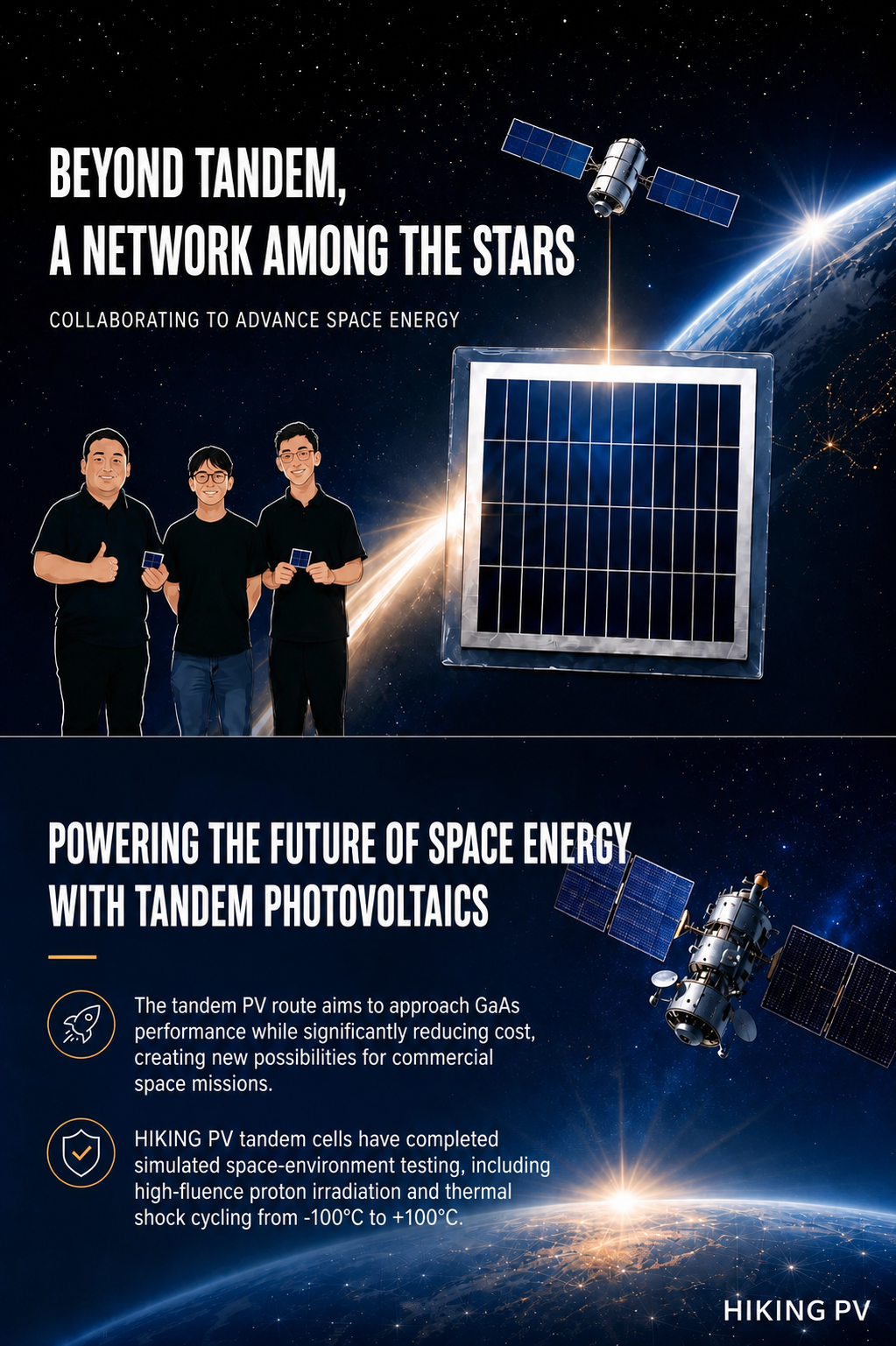
- HIKING PV tandem cells have completed simulated space-environment testing, including high-dose proton irradiation and thermal shock cycling from -100°C to +100°C.
- The technology route aims to approach the performance of gallium arsenide cells while offering cost-reduction potential for commercial space missions.
- On-orbit performance, engineering compatibility, and commercial readiness will require further aerospace-grade validation.
HIKING PV has entered a collaboration with a satellite-sector partner to explore tandem photovoltaic technology for space-energy applications. The parties aim to move tandem PV beyond laboratory efficiency records and ground-based reliability validation toward evaluation in satellite power systems and commercial space missions.
Why Tandem PV Is Relevant to Space Energy
Satellite solar arrays and space power systems place a premium on power per unit area, specific power, and long-term reliability. Tandem solar cells use absorbers with different bandgaps to capture a broader portion of the solar spectrum. Their objective is to deliver more power from a limited illuminated area, giving the technology a strong rationale for further aerospace evaluation.
Space PV systems must balance efficiency, mass, radiation tolerance, thermal-cycle stability, encapsulation reliability, and cost. The partnership materials describe a development goal of approaching gallium arsenide cell performance while reducing manufacturing cost. This remains a technology objective, and final suitability will depend on subsequent engineering and on-orbit validation.
Moving From Efficiency Records to Space-Grade Reliability Validation
Laboratory conversion efficiency alone is not sufficient to demonstrate readiness for a space power system. HIKING PV has conducted multiple reliability evaluations for its perovskite-silicon tandem technology, including a high-dose proton irradiation test and thermal shock testing from -100°C to +100°C. These tests evaluate performance retention under energetic-particle exposure and extreme temperature cycling.
The collaboration connects this technology-validation work with satellite application requirements. The next stage is to continue evaluating compatibility with satellite solar arrays, space power components, and related systems, supported by broader aerospace-grade testing and application data.
A Measured Path Toward Commercial Space Applications
HIKING PV will continue developing tandem PV around efficiency, lightweight design, reliability, and industrialization. For commercial space applications, tandem PV presents a route worth evaluating, but moving from ground tests to operational deployment still requires system integration, environmental qualification, and on-orbit data.
Through this partnership, the parties intend to expand the validation boundary for tandem photovoltaics in space energy and translate technology progress into engineering data that can be assessed and reproduced.