
Key Facts
- HIKING PV says tandem PV competition should move from laboratory efficiency records to mass-production planning, engineering validation, and real customer applications.
- HIKING PV’s tandem cell industrialization base project is continuing to advance.
- The company reports staged outdoor validation data showing about 20% to 30% power-generation uplift potential versus conventional crystalline silicon modules under the same area.
- HIKING PV says its tandem module efficiency is currently approaching the 27% to 28% level.
Perovskite-silicon tandem cells have again become a major focus across the PV industry. Leading companies continue to release tandem cell efficiency breakthroughs, showing that this technology route has a clear technical ceiling and industrial value. At the same time, public information also shows that some leading PV companies have made progress in tandem R&D but have not yet disclosed a clear mass-production plan for perovskite-silicon tandem cells.
Against this background, the industry is revisiting a key question: should tandem PV development remain at the level of laboratory efficiency records and staged demonstrations, or should it move further into real production lines, outdoor scenarios, and customer applications?
Efficiency Records Are Not the Same as a Mass-Production Path
Perovskite-silicon tandem cells are widely regarded as a core route for breaking through the efficiency bottleneck of single-junction crystalline silicon cells. Their value is not only in refreshing laboratory efficiency, but also in solving industrialization issues such as stable preparation, long-term stability, yield control, packaging reliability, process compatibility, production-line takt, and cost models.
Laboratory efficiency, certified efficiency, and mass-production plans should not be treated as the same thing.
HIKING PV Has a Clear Tandem Mass-Production Plan and Is Advancing Its Industrialization Base
HIKING PV’s tandem cell industrialization base project is currently advancing. The factory and production-line planning will not only serve sample validation, but also support engineering validation, pilot-scale expansion, and future mass-production introduction for tandem cells and tandem modules.
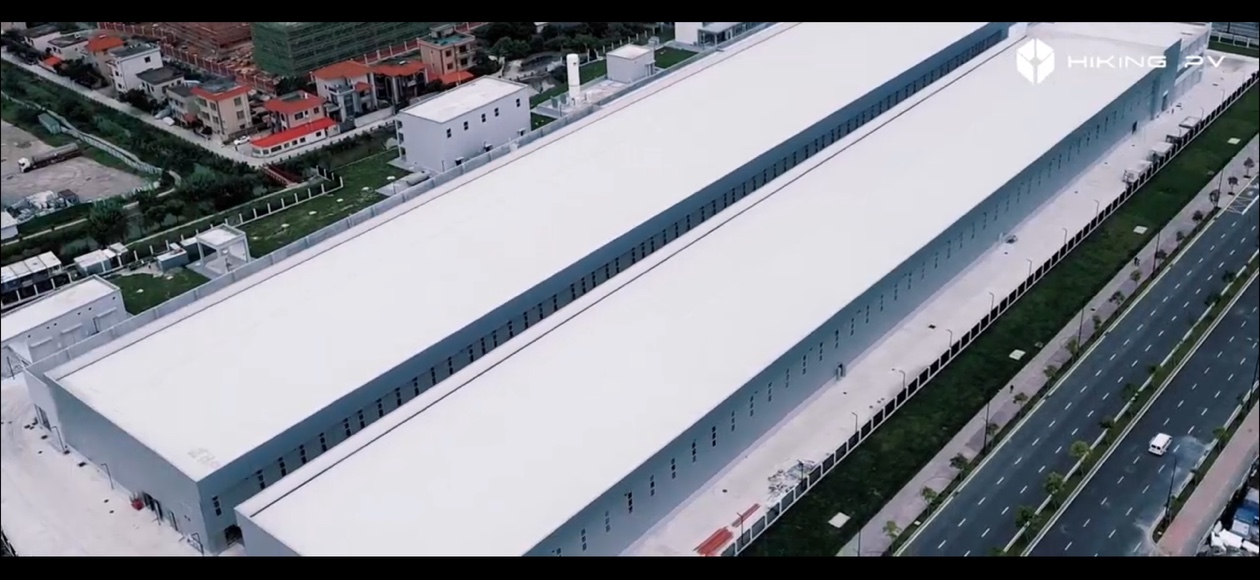
HIKING PV said it is building industrialization-oriented system capabilities around key links such as material systems, process routes, module packaging, outdoor validation, reliability testing, and mass-production equipment coordination. Through the continued development of its base, the company aims to bring tandem technology further from laboratory samples into real manufacturing and customer application scenarios.
Outdoor Data Is Closer to Customer Applications and Is an Important Basis for Tandem Industrialization
HIKING PV believes that the core competitiveness of tandem cells should not be judged only by instantaneous laboratory efficiency. It should also be evaluated by power-generation performance in real outdoor environments. Customers ultimately buy products that can continuously generate energy value on real rooftops, in outdoor scenarios, and under long-term operating conditions, rather than laboratory data alone.
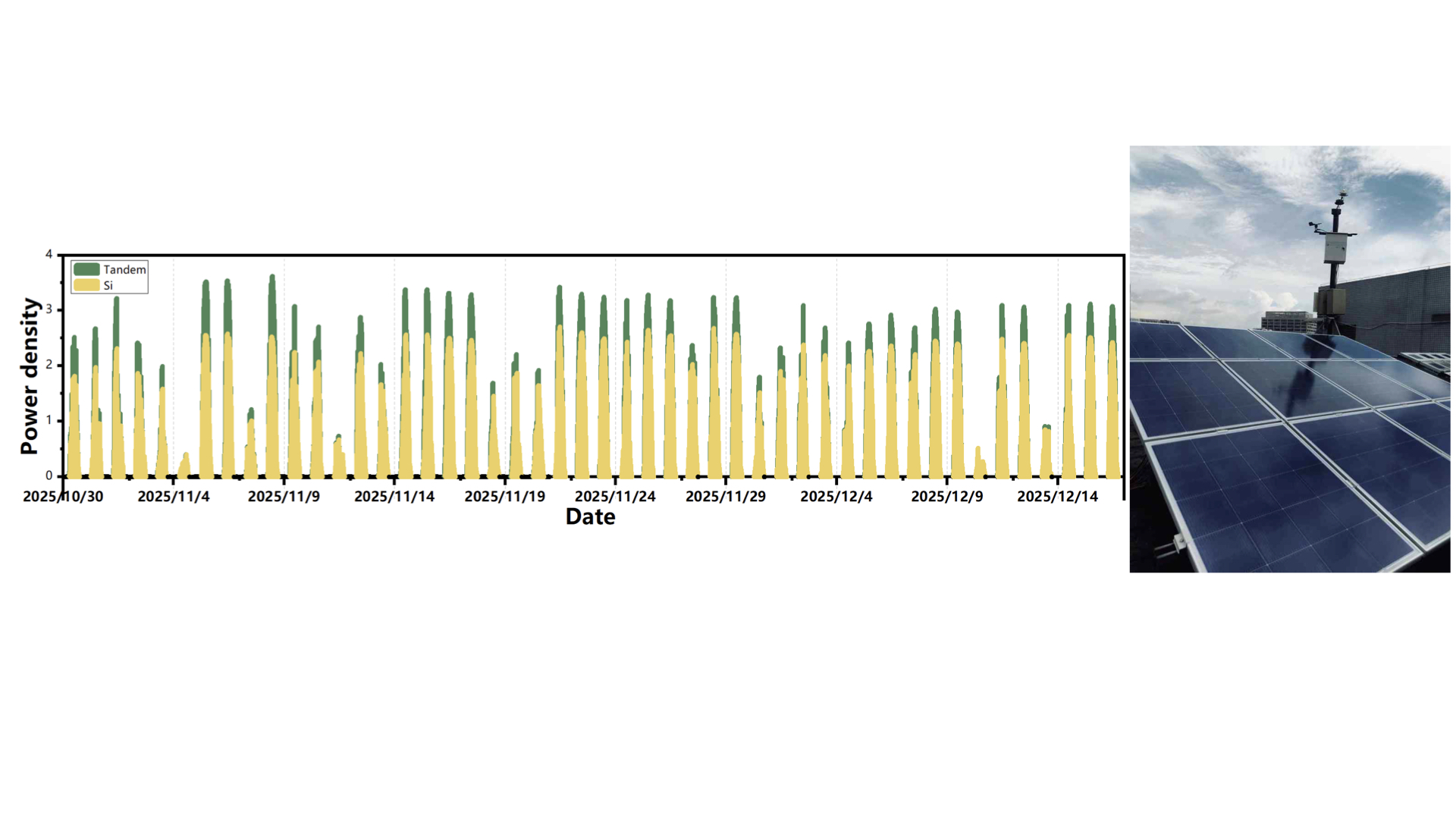
Therefore, continuously collecting outdoor data, optimizing outdoor performance, and validating power-generation capability under different climates and light conditions are important foundations for tandem modules to move toward commercial implementation. Compared with a single laboratory test, outdoor data is closer to real customer operating environments and can better reflect the power-generation value of tandem modules in real scenarios.
HIKING PV is one of the earlier companies in China to systematically conduct outdoor validation data collection and continuous optimization for tandem modules. According to the company, staged outdoor validation data show that, under the same area, HIKING PV tandem modules demonstrate about 20% to 30% power-generation uplift potential compared with conventional crystalline silicon modules.
HIKING PV said its tandem module efficiency is currently approaching the 27% to 28% level, while outdoor validation continues to verify its power-generation advantage per unit area. The company will continue to accumulate data over longer periods, more climate conditions, and more application scenarios to verify the long-term power-generation performance of tandem modules.