
Key Facts
- The certified device area is 16.2 cm², close to some space solar cell size requirements.
- The perovskite/perovskite/silicon triple-junction tandem solar cell achieved 29.67% certified efficiency.
- The technology targets satellite solar wings, solar UAVs, near-space vehicles, and deep-space power systems.
- The triple-junction structure is designed for broader spectral absorption, lower thermal loss, and higher power output per unit area.
- The article reports measured specific power of around 1200 W/kg, supporting lightweight and high-specific-power applications.
SHENZHEN, May 8, 2026 — Shenzhen HIKING PV Technology Co., Ltd. announced that its self-developed 16.2 cm² perovskite/perovskite/silicon triple-junction tandem solar cell has achieved a certified photovoltaic conversion efficiency of 29.67%. Unlike conventional small-area laboratory devices, the 16.2 cm² cell size is close to some space solar cell size requirements and is positioned at a publicly reported leading level among large-area devices designed to match aerospace solar cell specifications.
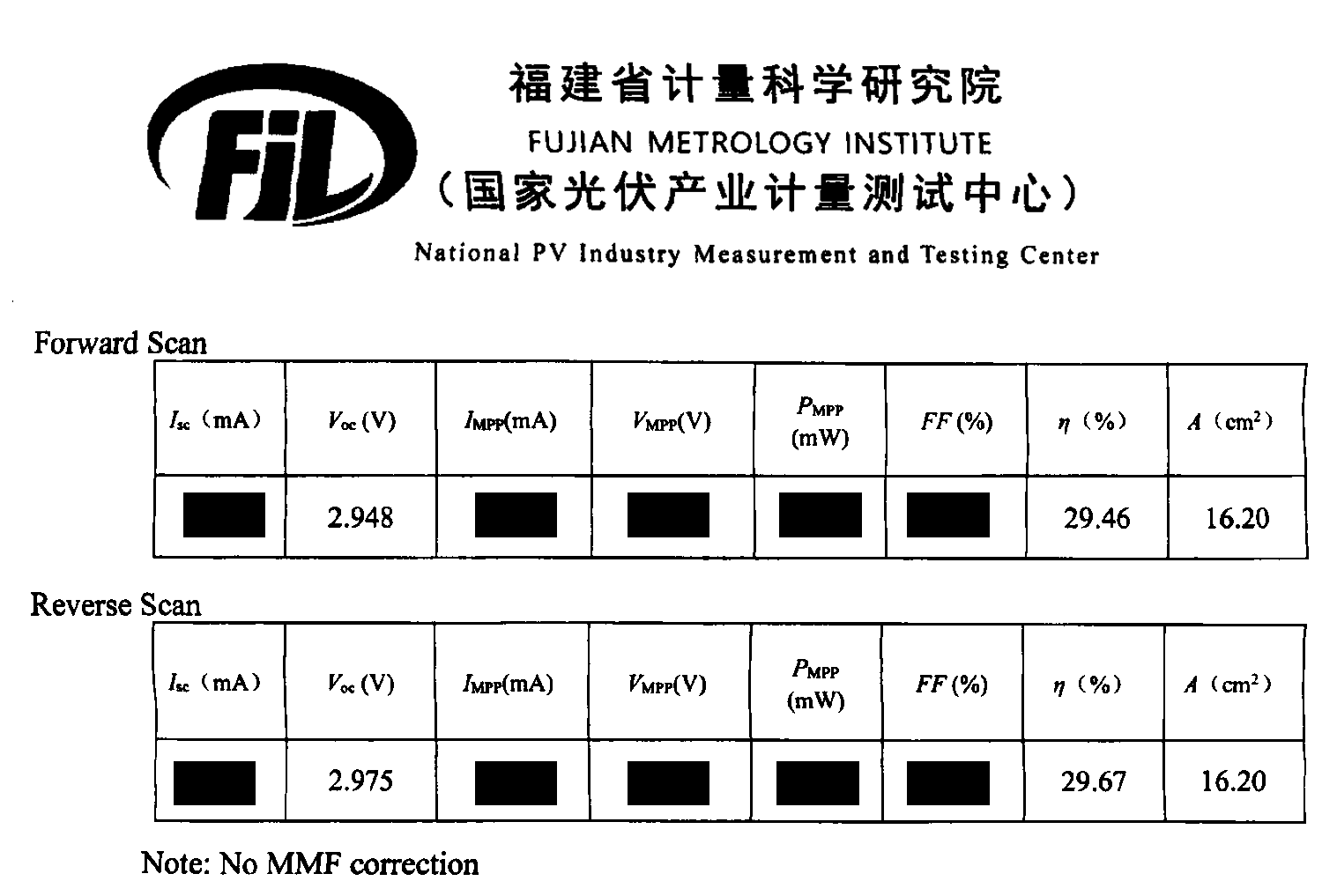
The result marks further progress for HIKING PV in high-efficiency perovskite tandem PV and demonstrates continued improvement in large-area fabrication, high-efficiency output, and application readiness for triple-junction tandem technology.
Large-Area Triple-Junction Tandem Technology for Space Solar Applications
Different from high-efficiency small-area laboratory cells, the 16.2 cm² device reported in this announcement approaches the size requirements of some space solar cells and shows application potential in the following scenarios:
- Satellite solar wings
- Solar unmanned aerial vehicles
- Near-space aircraft
- Deep-space power systems
- High-specific-power space PV modules
Combining high efficiency, lightweight design, and high specific power, the technology provides a new technical route for space photovoltaic systems.
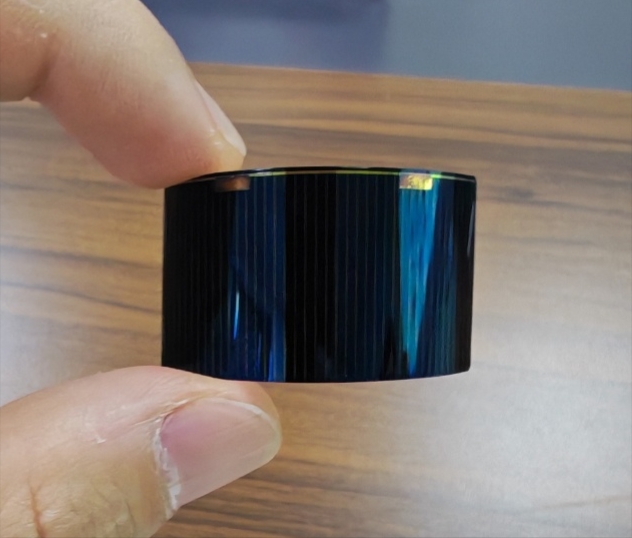
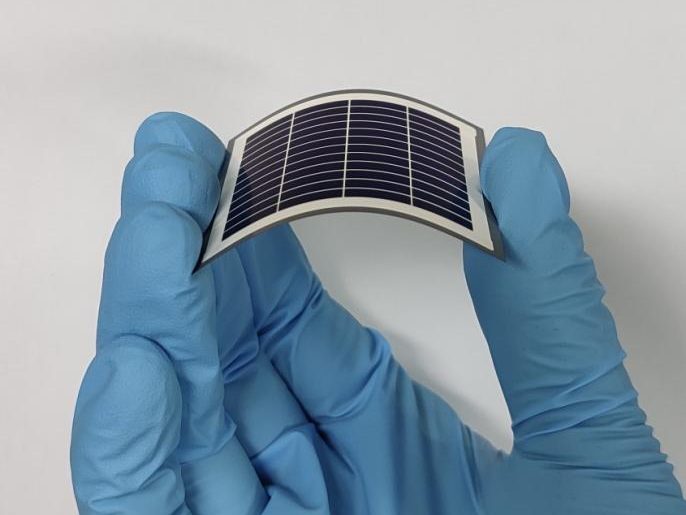
Why Triple-Junction Tandem Solar Cells Are Attracting Industry Attention
High-efficiency solar cell technology is gradually moving from conventional crystalline silicon routes toward perovskite/silicon tandem solar cells. Among these approaches, perovskite/perovskite/silicon triple-junction tandem structures are attracting sustained attention because of their higher theoretical efficiency ceiling and broader solar spectrum utilization.
Compared with single-junction crystalline silicon cells, this structure can provide:
- Broader spectral absorption
- Lower thermal loss
- Higher power output per unit area
- Higher specific power (W/kg)
- Better suitability for aerospace applications
In aerospace applications, high specific power, lightweight design, and thermal management are especially important. Conventional III-V multi-junction solar cells offer high efficiency, but their relatively high manufacturing cost limits broader commercial deployment.
HIKING PV said its triple-junction tandem technology shows clear cost-reduction potential compared with conventional III-V multi-junction cells, while demonstrating application value in lightweight and high-specific-power directions. The measured specific power is around 1200 W/kg.
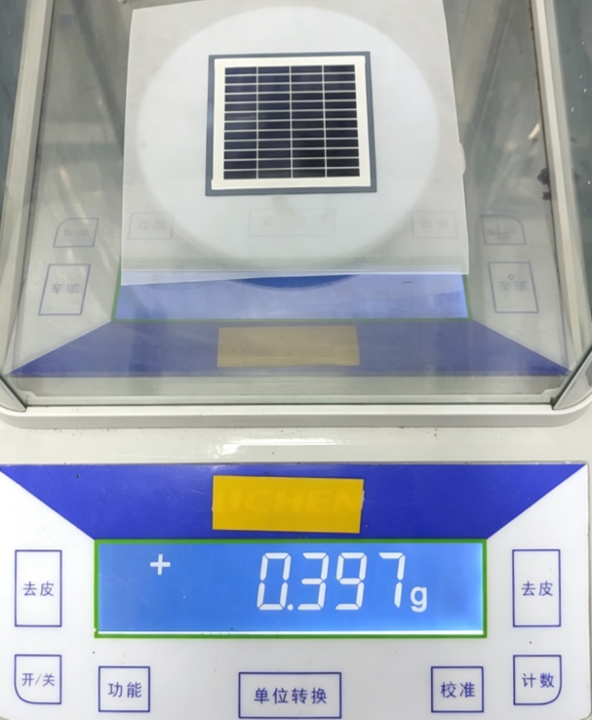
Further Room for Theoretical Efficiency Improvement
Beyond the currently certified 29.67% conversion efficiency, the R&D team said the triple-junction tandem route still has potential to advance toward higher efficiency under theoretical and laboratory conditions.
As perovskite material stability, interface engineering, and large-area fabrication processes continue to improve, the industrialization of tandem solar cells in high-end photovoltaic applications is moving forward.
Industry observers generally expect perovskite tandem technology to be applied not only in space PV, but also in high-end distributed PV, flexible lightweight modules, unmanned energy platforms, vehicle-integrated PV, and other high-value specialized energy systems.
Advancing High-Performance PV and Commercial Aerospace
The achievement further reflects HIKING PV’s R&D capability in high-efficiency tandem photovoltaics.
The company said it will continue to advance large-area triple-junction tandem solar cells in stability validation, mass-production processes, and aerospace application adaptation. HIKING PV aims to accelerate the commercialization of high-efficiency tandem PV technology and provide higher-performance, lower-cost photovoltaic solutions for commercial aerospace and advanced clean energy industries.