
Key Facts
- HIKING PV identifies two-terminal (2T) perovskite-silicon tandem technology as an important development direction for photovoltaics.
- Single-junction thin-film perovskite modules, two-terminal tandem modules, and four-terminal tandem modules are presented as different product routes.
- HIKING PV states that two-terminal tandem modules can offer relatively high efficiency at a lower cost compared with other perovskite integration approaches.
- Future photovoltaic growth is linked to efficiency gains, lower system costs, and continued reductions in levelized cost of electricity (LCOE).
- HIKING PV views module manufacturing cost and power generation efficiency as core variables for future industry competitiveness.
HIKING PV believes that against the backdrop of the global energy transition and continuously growing demand for computing power, the photovoltaic industry remains on a long-term upward trajectory with vast future potential.
As one of the earliest domestic enterprises to propose and promote the industrialization path of two-terminal (2T) perovskite-silicon tandem technology, HIKING PV entered this technical field at a time when relevant research and industrial deployment in the sector were still immature. As the tandem cell technology route has been gradually validated, numerous domestic enterprises and institutions have successively followed up with research in recent years, making two-terminal tandem technology an increasingly key development direction for the industry.
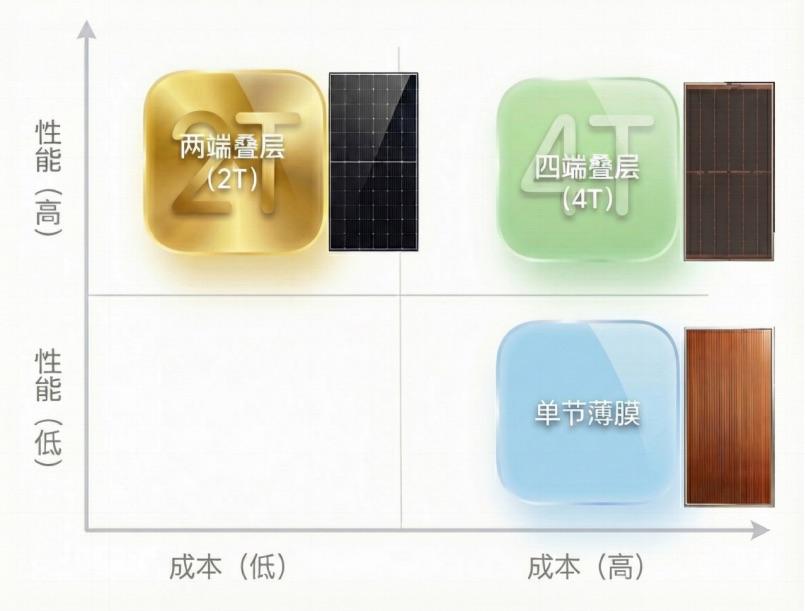
HIKING PV points out that there is still some confusion in the current market understanding of “perovskite” technology. In particular, many people have not yet fully distinguished the technical differences and commercial logics among single-layer thin-film perovskite modules, two-terminal tandem modules, and four-terminal tandem modules.
The company emphasizes that perovskite is not equivalent to perovskite thin-film modules. In photovoltaic power generation, different integration approaches of perovskite and crystalline silicon directly determine product form, cost, and scalability feasibility. From an industrialization perspective, the three technical routes can be briefly summarized as follows: single-junction thin-film modules feature relatively low efficiency and high cost; four-terminal tandem modules offer relatively high efficiency but also high cost; two-terminal tandem modules deliver relatively high efficiency at a lower cost. These three types of products are fundamentally different in commercial logic and product nature and cannot be simply generalized under the single term “perovskite”.
Regarding future industry trends, HIKING PV holds that the overall levelized cost of electricity (LCOE) will continue to decline. With efficiency improvements driven by technological progress and reductions in system costs, module manufacturing costs and power generation efficiency will become the core variables determining LCOE.
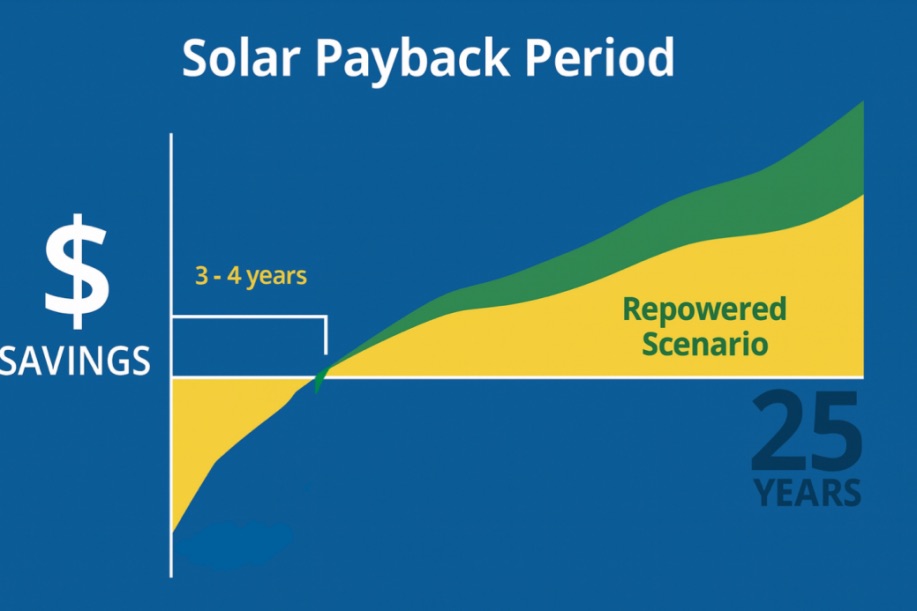
Against this backdrop, HIKING PV takes the lead in proposing that the economic value of future photovoltaic modules will no longer necessarily rely on a “25-year full service life”. In specific market and electricity price environments, periodically replacing modules with higher efficiency and lower costs will instead help further reduce LCOE and improve the overall return on investment of power stations.
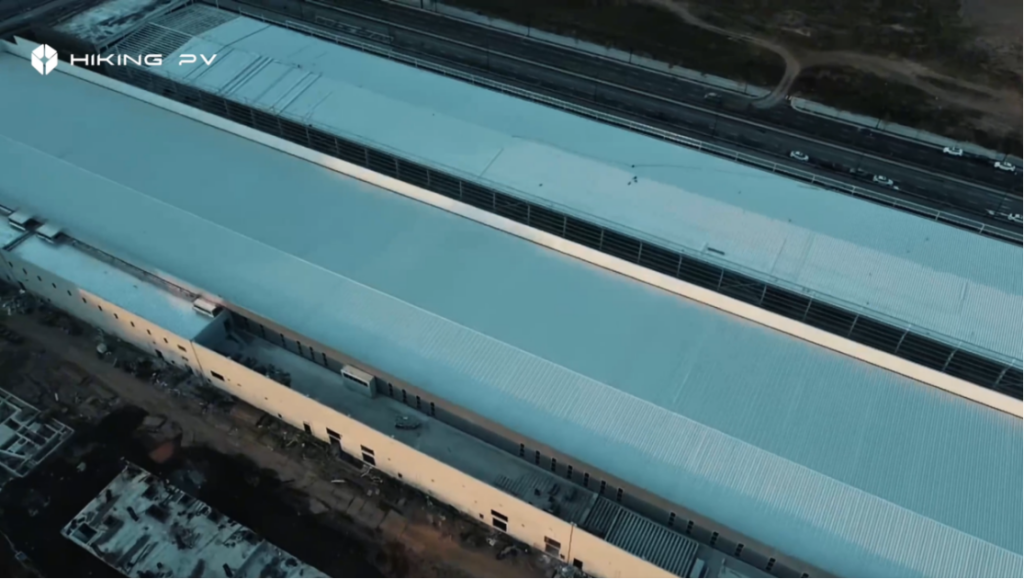
In terms of industrialization progress, HIKING PV has devoted years to pilot-scale R&D, with a sustained focus on the mass production and commercialization of two-terminal tandem technology. At present, the main structure of the large-scale production plant has been completed, and pre-production preparations are proceeding as scheduled.
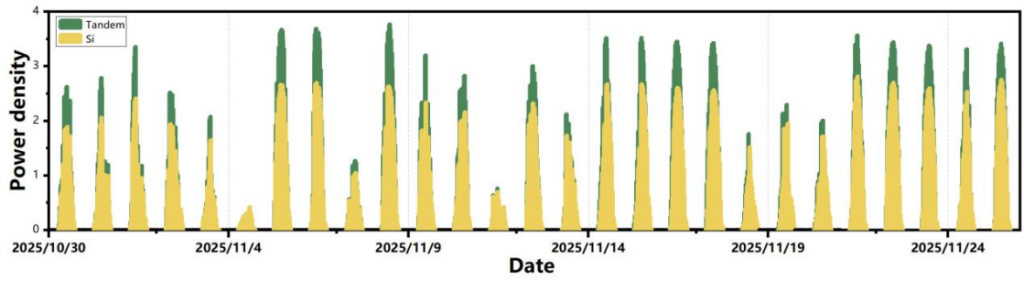
HIKING PV states that its products have passed IEC accelerated aging tests conducted by multiple institutions. In actual outdoor field tests, no significant performance degradation has been observed so far, and power generation is approximately 20%-30% higher than that of conventional crystalline silicon modules. Going forward, the company will continue to optimize its technical solutions to further enhance product cost-effectiveness.
FAQ
What technical route does HIKING PV emphasize in this article?
HIKING PV emphasizes two-terminal (2T) perovskite-silicon tandem technology as an important development direction for the photovoltaic industry.
How does the article distinguish perovskite technologies?
Perovskite should not be treated as a single product category because single-junction thin-film modules, two-terminal tandem modules, and four-terminal tandem modules differ in product form, cost, scalability, and commercial logic.
Why does HIKING PV focus on two-terminal tandem modules?
HIKING PV states that two-terminal tandem modules can deliver relatively high efficiency at a lower cost, making them commercially different from single-junction thin-film and four-terminal tandem module routes.
What factors support future LCOE reduction?
Future LCOE reduction is connected to technological progress, efficiency improvements, lower system costs, module manufacturing cost, and power generation efficiency.
What broader market context is described?
Photovoltaic demand is supported by global energy transition trends and growing demand for computing power.