
Shenzhen,2026
Open claw is beginning to reshape research cycles in the solar industry. Advanced photovoltaic technology company HIKING PV announced that it has deployed its proprietary OpenClaw AI research platform to accelerate development of perovskite–silicon tandem solar cells.
Perovskite tandem technology is widely considered one of the most promising pathways for pushing photovoltaic efficiency beyond the limits of conventional crystalline silicon. Laboratory efficiencies for tandem devices have already exceeded 34%, but long-term stability remains a key challenge for commercialization.
HIKING PV said its OpenClaw platform combines machine learning with experimental data to analyze relationships between material composition, device architecture and long-term reliability. The system can identify degradation mechanisms such as ion migration, interfacial defects and phase instability in perovskite layers.
According to the company, AI-guided experiment design has reduced the number of required laboratory experiments by roughly 70%, shortening development cycles for material optimization from three to six months to about four to six weeks.
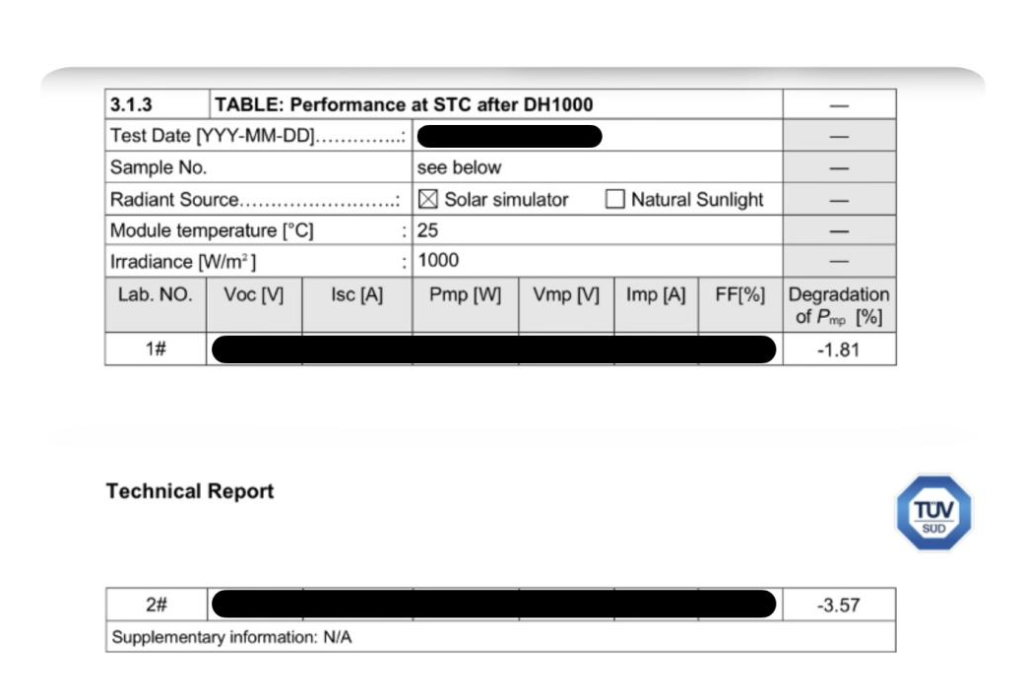
Using this AI-assisted framework, the company reports that its latest perovskite–silicon tandem devices have passed key third-party reliability tests, including IEC61215 Damp Heat 1000-hour testing, with power degradation below 5%.
The introduction of AI tools may also shorten the broader innovation cycle in photovoltaics. Early crystalline silicon technology required roughly 40 years to reach large-scale commercialization, while technologies such as PERC took about 15 years to move from research to mass production.
With advances in artificial intelligence, high-throughput experimentation and materials databases, the development timeline for emerging solar technologies may continue to shrink.
HIKING PV said it is targeting commercial tandem technology exceeding 30% efficiency as the next step toward industrial deployment.